Meet Katherine (Katie) Hostetler, a park ranger with the National Park Service who has a deep passion for history. She is the acting chief of interpretation and visitor services for the Southeastern Arizona National Parks. This includes Chiricahua National Monument, Coronado National Memorial and Fort Bowie National Historical Site, where she manages and trains volunteers and park rangers for all three locations. She also designs and plans on-site community events, learning programs and special events.

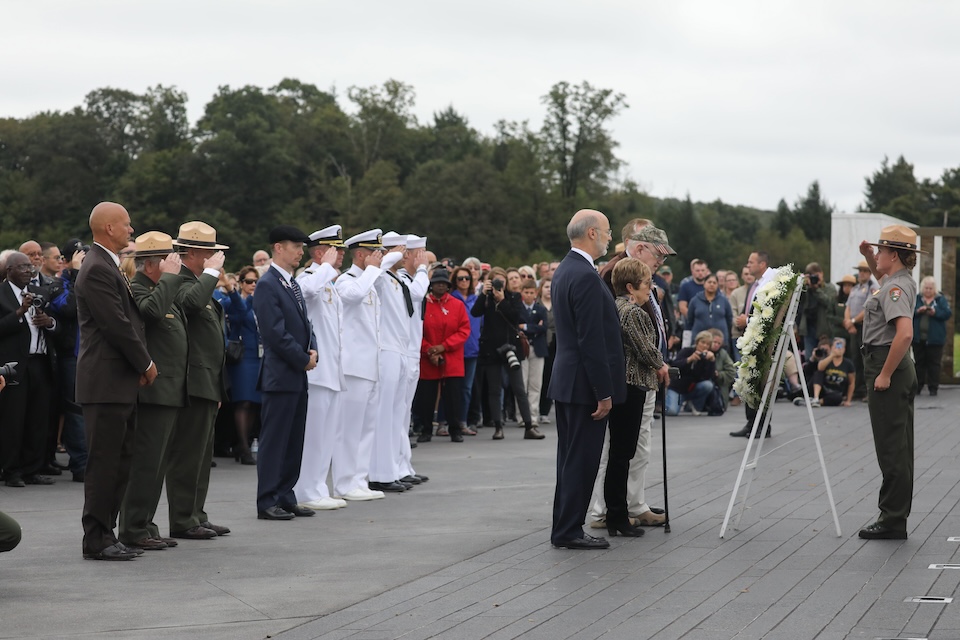
When I met Katie, she served as lead ranger at the Flight 93 National Memorial. She also contributed to the memorial for nearly 10 years as public information officer at notable events, such as the Visitor Center dedication in 2015 and the September 11th Observances. Previously, Katie filled several public history roles at a variety of sites, including at a children’s and a state museum, the Johnstown Flood Museum and Plimoth Plantation.

As you’ll see in her interview, Katie is extremely dedicated to preserving and sharing the vast range of stories within history. This love for the past began when five-year-old Katie found an ancient arrowhead on her family’s 18th-century farm. Her parents, who are active participants in living history events, encouraged her newfound interest and fed it with trips to historical events and sites. “I think growing up on the same land that my ancestors did also played a role in my love of history,” she writes. She later completed a History degree and an additional degree in Archaeology. Katie’s passion continues to inspire her career and fuel her lifestyle today.
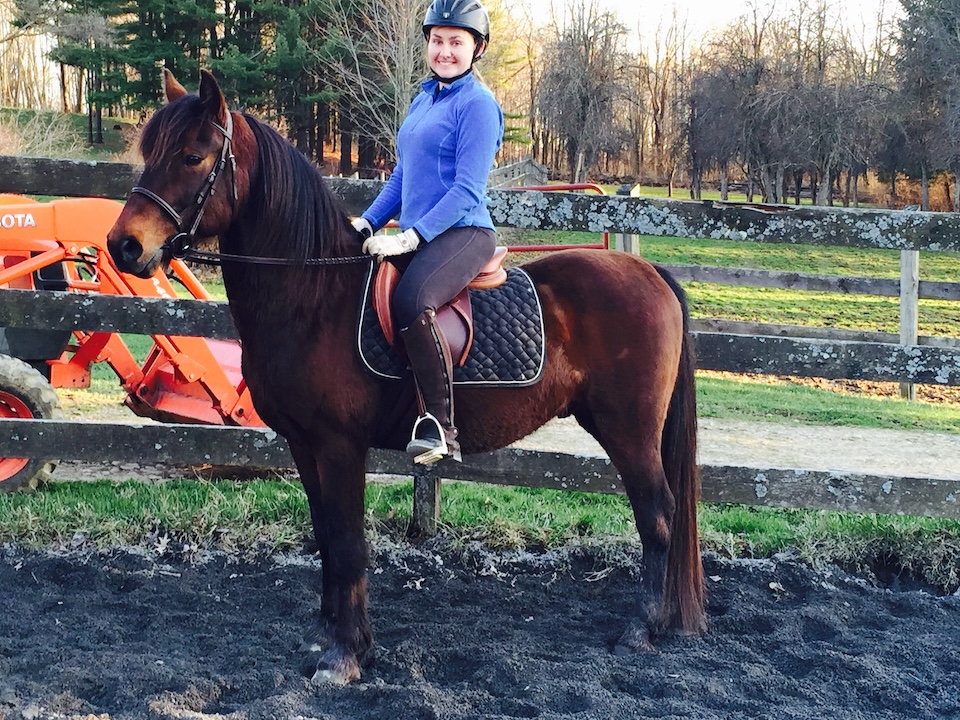
When not wearing the park ranger uniform, you’ll find Katie exploring the national parks she’s so connected to. She loves animals and often hikes with Tilly – her Cardigan Welsh Corgi – or rides horses. “I’ve merged my love of history by preserving foundation breed Morgan horses, one of the oldest American horse breeds,” Katie writes. “Many of the cavalry horses during the Civil War were Morgans and were famous for their stamina, willingness to please and versatility. I have done everything from driving, jumping and trail riding with mine!” Katie also is an artist, and greatly enjoys watercolor painting. The desert landscapes surrounding her home provide ample inspiration, so she focuses on painting her local terrain. Read on for this driven and devoted woman’s answers to our six Gal Gab questions.
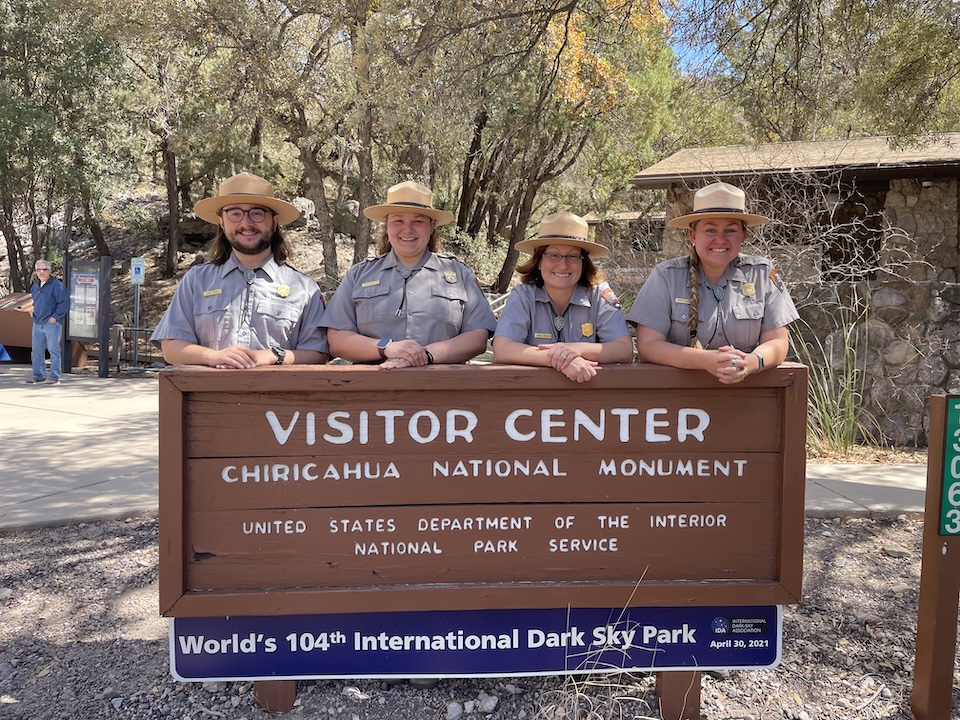
What does a typical day in your work life look like?
What I love about being a park ranger is that every day is different. Though there may be a schedule, you can never predict what wildlife you’ll see, the rainbows, the sunsets or which visitors will walk through the door. In my current role, I manage three visitor centers, a campground, dozens of dedicated volunteers and a handful of the most passionate park rangers. For me, it’s having the opportunity to work in parks with people who also love national parks and share with visitors why they’re important – that fuels my drive to tell these stories every day.

What is the #1 piece of advice you would give other females who want to break into your industry?
NEVER STOP. Keep calm and ranger on. There’s no doubt this industry continues to be male-dominated. When you think of a park ranger, you imagine the iconic flat hat or Smokey Bear hat, and I promise you ladies can wear it just as well; your ponytail helps hold it on in windy weather! (I have very long hair.) The best advice is to show up and do good things.
I started in the National Park Service as a seasonal ranger; like most park rangers, seasonal positions are our entry level – they’re your foot in the door. With sometimes hundreds of others pursuing each advertised position, what sets you apart isn’t the degree from a fancy college (though it helps), but your ability to handle diverse and often stressful situations calmly. You show up and jump in; that junior ranger you swear in might want to be a park ranger someday. Visitors notice when you go out of your way: you pick up a piece of garbage, help a turtle cross the road, give directions after the visitor center is closed or answer the same question for the 1,000th time that day.
What motivates you?
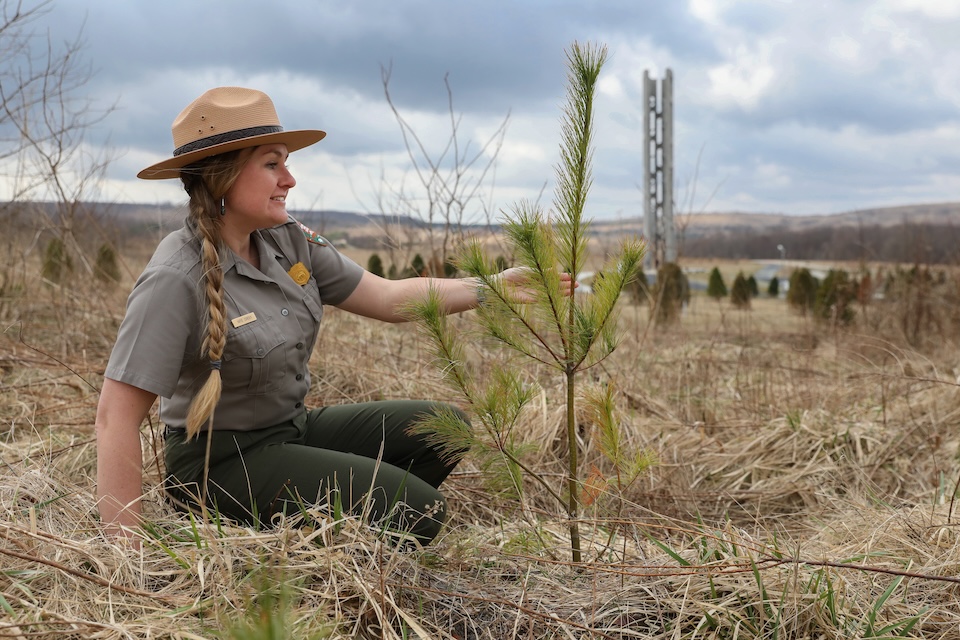
Honestly, the uniform. Since the first time I put it on, I have been humbled by the opportunity to have the honor of working in one of the most recognized positions in the federal government. EVERYONE knows what a park ranger is!
I care for the untold stories. It’s our job as park rangers to interpret, protect and preserve each of the over 400 national park units and give a voice to the unheard stories – to change the perspective of how you may look upon an event, a place or a people. Whether it’s sharing the stories of the Indigenous peoples who called these lands home for thousands of years, or the people who fought for these parks, every story matters. I often think of how the actions of a 21-year-old George Washington at Fort Necessity changed the course of history. This gray shirt, green wool pants, hiking boots and flat hat represent over a century of caring for the most American of ideas: National Parks!
What is the most unexpected thing you’ve learned while working in your industry?
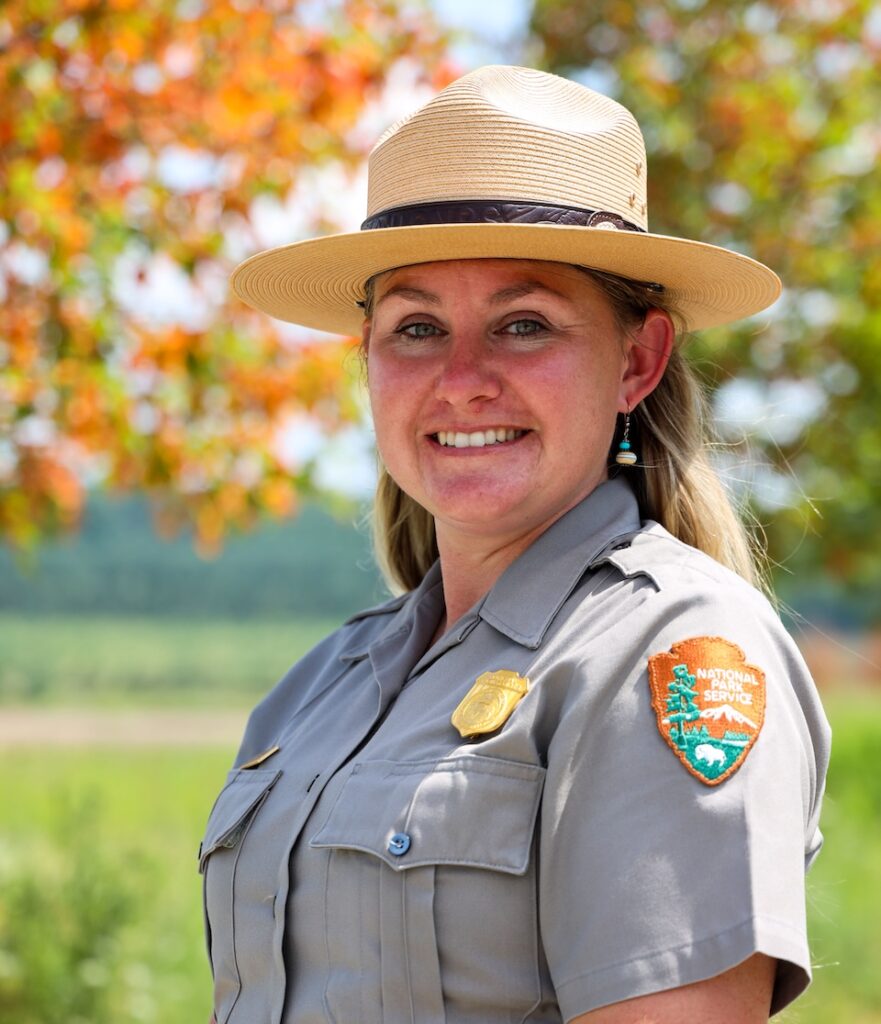
The emotional connection visitors have and how often you become part of their most meaningful memories. You often share but a few fleeting moments, but the difference you can make on a family’s vacation can last decades. I will always stop and listen to a ranger program when I am visiting national parks because often years of research go into that simple 15-minute program, and you could never read all that in a short visit. The impacts visitors have made on me, I will treasure for my entire life!
What’s your favorite product in the outdoor or shooting market right now?
I cannot, while in uniform, show favoritism to a particular product, but something I cannot live without is my Frost River backpack. I take it with me every day in uniform. It has hiked countless miles, traveled across the country multiple times and carried all of my essential items safely (laptop and water bottles included). In a job where I might go from a visitor center desk to a remote trail in minutes, having reliable gear I can count on isn’t just convenient, it’s essential.
Let’s have some fun … What weapon would you use to battle a giant?
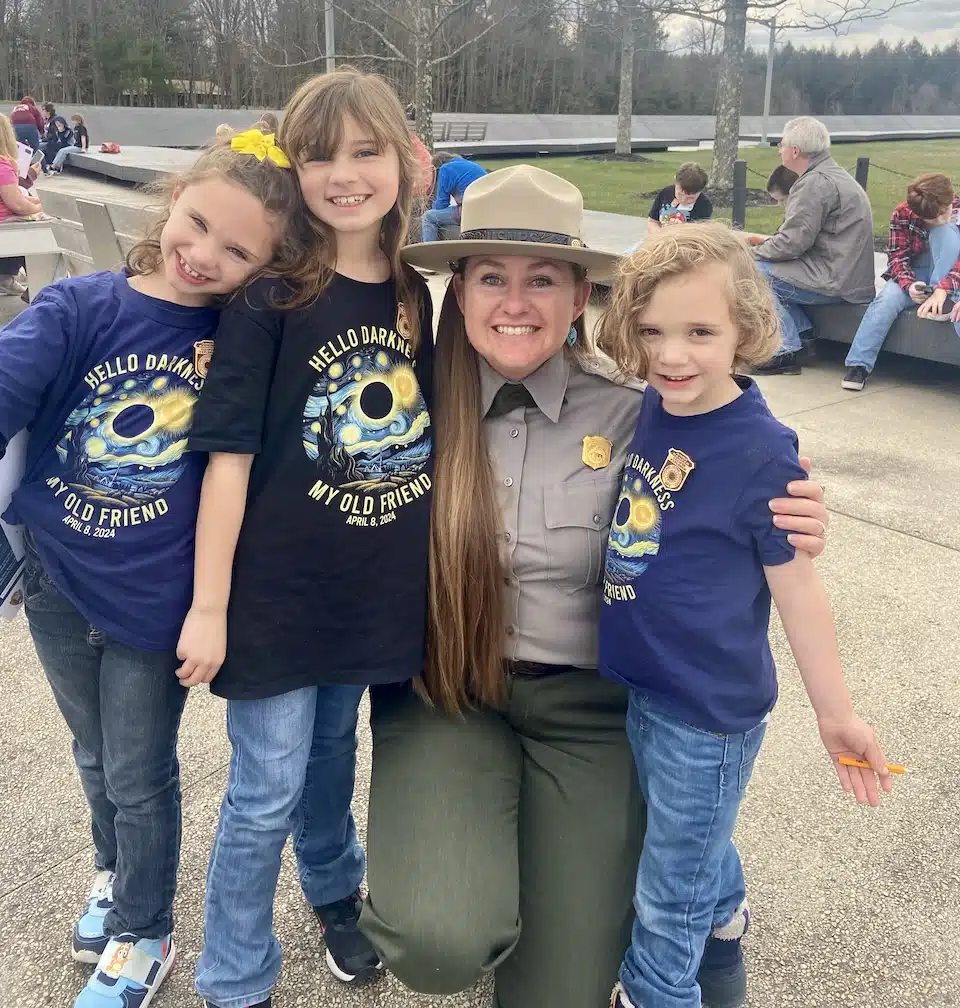
My words and a Junior Ranger badge. Hear me out: every giant was once small, and maybe they just need someone to share the beauty of our parks with them. I’d interpret the landscape, tell them the untold stories of the place and remind them why these lands are worth protecting, not destroying. And if they complete their Junior Ranger booklet? They get sworn in, and suddenly we’re on the same team. If that doesn’t work, I’ve always got my flat hat! Not only does it shield me from the sun on long patrol days, but I’m convinced if I threw it just right, it could work like Captain America’s shield. Plus, after wearing it through countless hikes and storms, it’s practically indestructible. If that doesn’t work, I’d use my ranger knowledge – lead the giant on a trail through the wilderness, tire them out with switchbacks and distract them with the beautiful views along the way. By the time we reach the summit, they’d forget what we were fighting about.
Follow Chiricahua National Monument on Facebook and Instagram, Coronado National Memorial on Facebook and Instagram, Fort Bowie National Historic site on Facebook and Instagram and the National Park Service on Facebook, Instagram, X and LinkedIn.

Madeleine Golob, formerly “Anna,” is our intern at the “Women’s Outdoor News,” and manages the “Gal Gab” column. She also pens features and takes care of our Pinterest activities. Madeleine is a high school student who loves to write, read, study her family’s genealogy and play any musical instrument she can get her hands on. She also enjoys working Action Pistol matches while her parents compete and dreams of becoming a historian and writer. View all posts by Madeleine Golob