Have you ever wanted to assess your ability to function under stress in a situation involving personal defense? If so, scenario training might be something you should consider.
Last fall, I was invited to take part in scenarios hosted by CCW Safe held at Range Ready in Louisiana. The real takeaway for myself was less about tactics and skills and more about the legal ramifications of use of force for personal defense. The event forced a hard look at what resources and protections I had in place, if I were put in a situation where I needed to defend myself and my family.

For myself, I did not have any specific expectations from the event, aside from learning. I knew several of the other participants and two of the employees at Range Ready, and felt that at least it was not a situation with complete strangers. That said, if you were to attend a scenario event, I would do it with someone who has similar goals to your own, like your spouse or close friend.
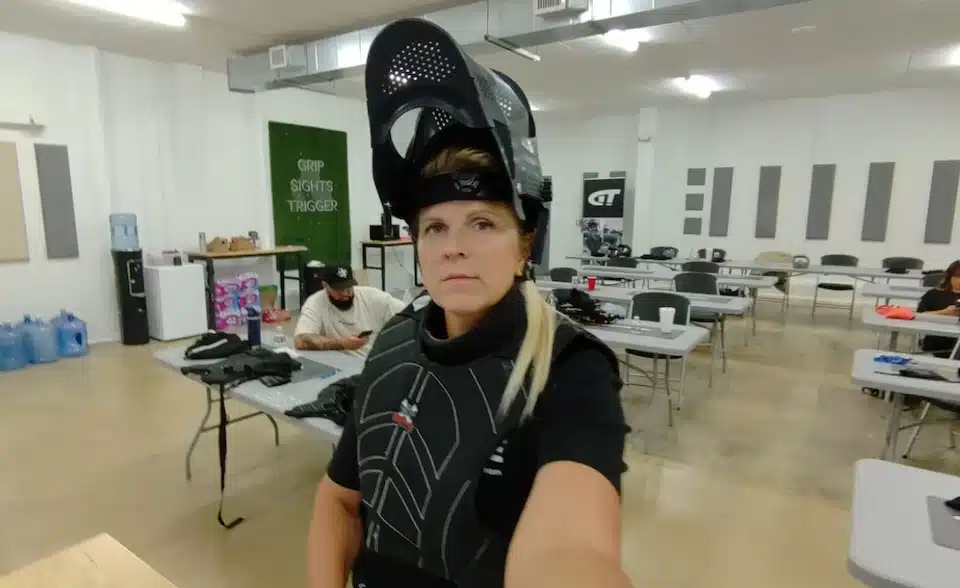
To start the event, we talked in a classroom setting about use-of-force, about the legal ramifications of being in a use-of-force event and what that means both physically (that you will likely be detained by the police, until you are bailed out) and mentally (how do you deal with having to protect yourself and/or your family and then being treated like you were the one doing something wrong, or God forbid, being in custody when a family member was harmed by the perpetrator). This is morally and legally “heavy” subject matter; it can leave you feeling a bit frustrated with the legal system and the framework that law enforcement must work within. It definitely primes your mind to think through scenarios and look at the legality of things, in addition to danger signals in the scenario. CCW Safe brought in experts to share their knowledge with us, as well, which proved immeasurably informative throughout the course.
In order to make the event realistic, the group was given a brief about what to expect, then fitted with safety gear and less-than-lethal pistols, which fire what is essentially big airsoft pellets. The pellets are capable of breaking skin, and that meant that we all wore gloves for safety – something that definitely played a role with how comfortable it was to grip the pistol. This addition of gloves hands created a little knock in confidence as you could interfere with the slide and induce a malfunction in the firearm. But in all honesty, if someone hasn’t thought about that reality before, it can be very educational. Just the concern about getting hurt from a pellet gave a little sense of the repercussions of not doing things correctly with your firearm while navigating the scenario.

We each went through the scenarios, were videoed during them and then did a short debrief after each one with the CCW and Range Ready staffs. In one of the scenarios, I used my voice and got the assailant to back off into a parking lot while I moved myself into a locked building. One trainer didn’t like that I failed to use a wall for cover, and instead forced the assailant back. One of the female CCW Safe staff, Cris Cunningham, was quick to remind him that I accomplished my goal without having to use force. But, it was definitely a learning moment because while it felt safe to be in a locked building; however, if the “bad guy” was set on hurting me, I would likely have had to shoot him, and doing that from behind a half concrete wall would have been a more hardened position than a locked glass door. I bring this up because I’ll explain below how that conversation furthered my learning at the event.
Aside from my feelings about an absolute need for legal protection, should you need to use force, the intensity of scenario training was the other biggest eye opener. I’ve competed with firearms for decades and have done it under a lot of pressure, sometimes with cameras inches from my face. The face shield and intensity of wanting to make the right legal choice, but also not get shot by the “bad guy,” as well as using my voice from inside a mask, really amped up my adrenaline.

The physical and mental intensity possible from this sort of training requires proper balance and after action. If you were to seek out a scenario training event, make sure it offers a “pressure release” into the day, preferably between each scenario.
The CCW Safe staff did a group debrief once we all completed a scenario, in addition to an individual one immediately after our turns. It was interesting seeing how different people addressed the scenarios, and how the walks of life we all come from play into the way we each assessed and addressed the challenges.
Two very noteworthy items from my perspective, especially the incident I mentioned above with using my voice to get the “bad guy” to move, included the following things: 1), how much easier it is for a bigger/stature male with a big voice to strike some fear into the potential perpetrators, and 2) how much society has ingrained us to be kind to others.
When guys get loud, it’s usually a deep, booming voice and I wish I had more of that. Combined with a face shield, it felt as if I was shrieking at the “bad guy,” which makes me want to laugh while I watch videos. Women should absolutely practice using their voices loud and in a commanding tone. I was told that I did a good job with it. And in life, I have often been told that I can intimidate people, but I still feel that I need a voice coach for when I want to strike fear with my voice.

On the subject of being kind to strangers. There are Bible verses for it: “Do unto others” and, “Be not forgetful to entertain strangers.” I look at this mindset and think it’s fine for dealing with family and friends, but with real strangers, especially ones who pose potential threats, it’s grossly misplaced thinking. Teaching ourselves and our families to use discretion and being wary is not teaching them to be callous. It’s teaching them to read signs and take action, which sometimes means not talking with or helping strangers.
Training in any type of use of force requires a bit of due diligence. You need to make sure that your expectations and the skills required align. You also need to seek qualified trainers. Ensure that you are seeking training of this intensity from people with not just the background of using force in real-world experiences (e.g., police or military), but also look for trainers that offer controlled environments and safety protocols. Just because someone held a job as X does not mean he has the background to run training that puts others into realistic scenarios.
In the end, what my biggest takeaway from the event was is that anyone who thinks they might have to use force to protect themselves should consider having some sort of legal back-up in place. This isn’t even directly referring to firearm owners; it could be people who think they would use their vehicles to escape a mob of rioters, or even someone who uses a non-lethal tool for personal defense.
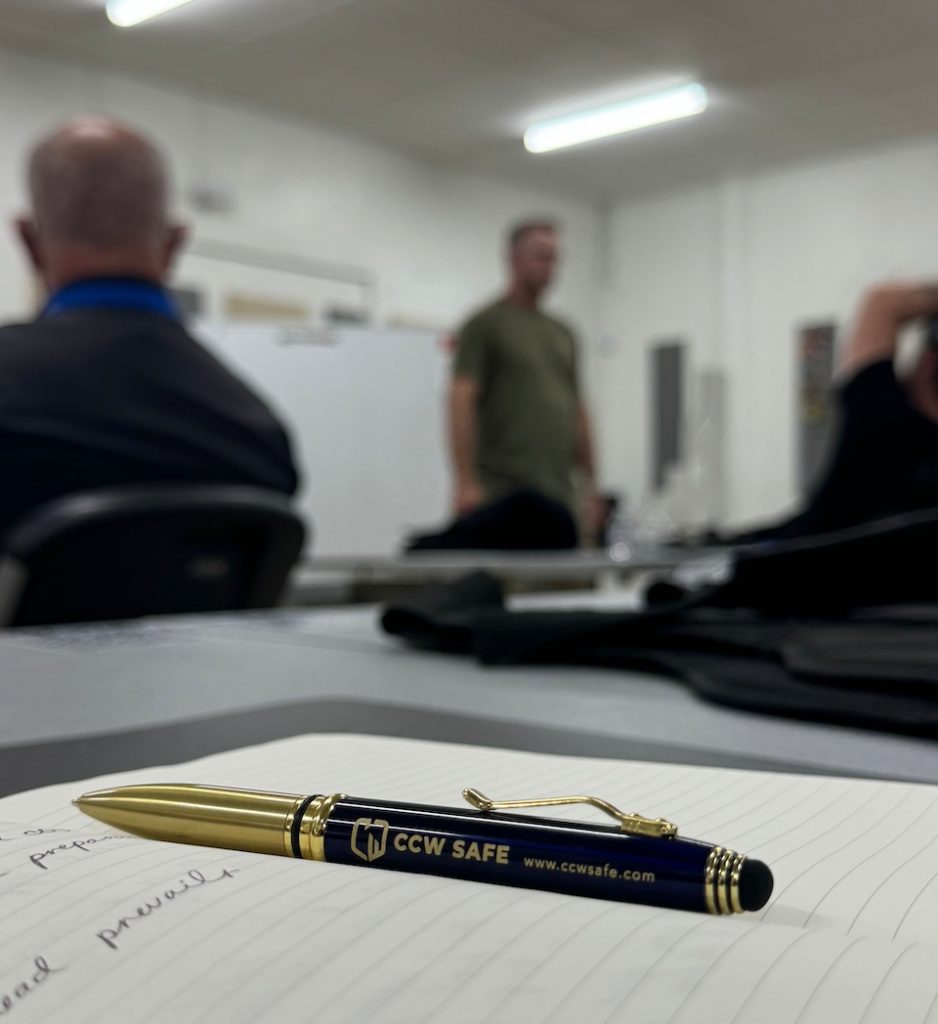
The reality that using force to protect yourself or your family will lead to your arrest and a potential cascade of legal and financial troubles is something people need to take ownership of and find legal protection for. CCW Safe offers that service. Through the scenarios with them at Range Ready, it really drove home that all we can do to avoid bad situations is worth more than anything. But should you need legal help, CCW Safe offers protection, not just help with their Critical Response Team activating immediately, or coming to bail you out and get you the best legal counsel for your particular case, but they also are organized to do this all with incredible speed and personal attention that is above and beyond what you’d expect.

Becky Yackley primarily competes in 3 Gun, USPSA, Bianchi pistol, but has competed in shooting since 1989 in disciplines from service-rifle, to NCAA Air Rifle and Smallbore, air pistol and a little bit of long range rifle. She shoots guns and cameras at competitions around the country, and writes in her fictional spare time. View all posts by Becky Yackley