
In 2003, Dr. Tommy Floyd served as a high school principal at Somerset High School in Kentucky, and when not in the office, he might be found in the gym, coaching young archers in the National Archery in the Schools Program (NASP®). Several of his archers went on to claim state championships. After 30 years of teaching, working as a principal and then superintendent in public education, Floyd accepted the helm of the NASP® in 2015 – the second president since its inception.

We had the opportunity to ask Floyd some questions about the program, its mission and goals. We think you’ll be encouraged by his answers and vision.
The NASP®website states that you had 98+k students across the nation in 2024-2025. Has there been a steady increase in numbers over the years?
Since the pandemic, the NASP® has steadily grown at a rate of about 1,300 new schools per year. NASP® is now operating in 62 jurisdictions with 1.2-to-1.3 million students receiving lessons per year.

The NASP®is one of the few, if not only sports, that I can think of where girls and boys compete side by side. However, are there categories for girls and boys?
Our intent is for girls and boys to represent the school where they are enrolled. Teams are made up from students at the school.
Since inception, our model has involved both female and male archers. As the school make-up varies by enrollment, our competition rules have been specific to ensure there are participants of both genders. Our rules state: “A NASP® archery team must contain 12-to-24 students, at least 4 of which must be of the opposite gender.”
This has proven time and time again that the sport has been made available to both genders of a participating NASP® school.
Our statistical data dating back several years indicates that there are no significant performance differences between the 4th grade females vs. males.
The full NASP® rules can be found here: https://www.naspschools.org/download/national-rules-bullseye/?wpdmdl=2392&refresh=698100eee62d81770062062
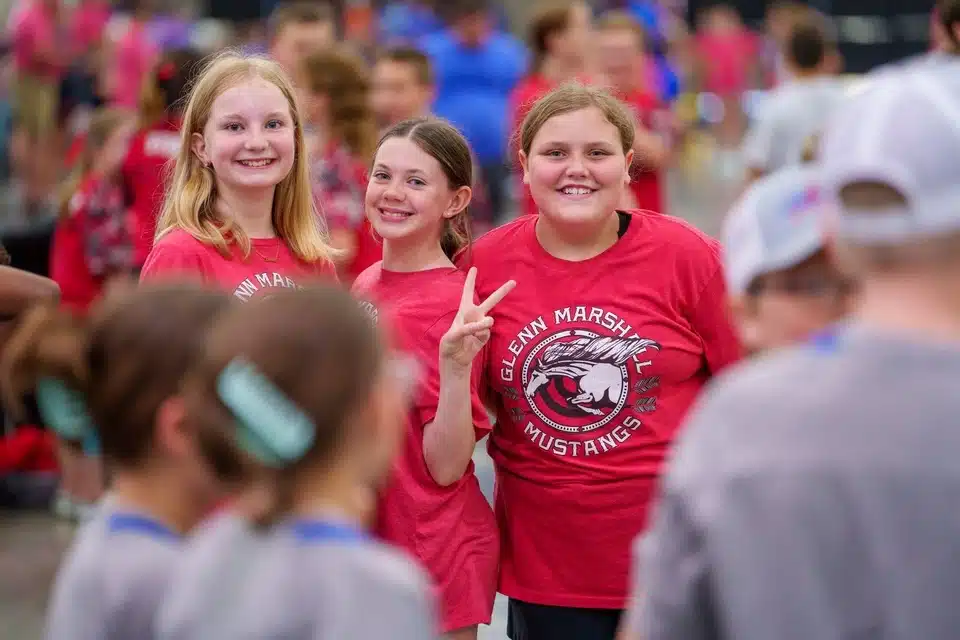
Do girls participate in all factions at the same levels as boys, like the 3D portion?
Yes. Archery is one of the very few activities in which girls and boys can truly compete side by side, something that educators know helps with socialization. NASP® has the same individual categories for both females and males for bullseye and 3D.
What are some of the success stories you’ve heard regarding girls and college or Olympic success?
Sophie Huff, Kentucky: Archery provided Sophie confidence allowing her to find her voice and become a great public speaker. She started archery in the fourth grade and is still competing as a high schooler! She stepped up at a tournament as an announcer when there was a last-minute need and provided a high-quality delivery. Despite moving to a new age group, she volunteered to participate in an open house to promote the archery program. Read more about Sophie’s story here.

Emily Hopkins, Tennessee: Emily began her involvement in archery in the fifth grade. She struggled at first, but once she got her own bow she began to practice daily. Her scores started to increase each week, and she started receiving medals at local tournaments. Along with her archery success, she also began to excel in the classroom. She received many academic success awards along with being recognized for her character. Read more about Emily’s story here.

Sarah Purtee, Kentucky: Joining NASP ® when it started at her middle school, Sarah continued shooting until she graduated. She went on to be successful at several contests both regionally and globally, but also to shoot archery in college. Sarah notes NASP prepared her for her current career as a licensed therapist working in schools. She learned problem solving, teamwork, discipline, work ethic, and how to take pride in yourself. She now is able to pass on her valuable experience as a NASP coach at her former school where her archery career began. Read more about Sarah’s story here. (Go to page 8 of the report to see her story.)
Additional success stories can be found in the “WHY NASP®” section of our website: https://www.naspschools.org/why-nasp-categories/why-nasp-archery/

You’ve been around this program since 2002, are you beginning to see the fruits of the NASP’s labors, meaning are some former NASP®students now returning as coaches and mentors? Are their kids doing NASP®too?
Yes, we’ve seen many fruits. Two we’re most proud of include being the largest youth archery program with 24.7 million students in grades 4 through 12 experiencing archery and having many dedicated supporters and sponsors in the archery industry, state fish and wildlife agencies, conservation organizations, parents, grandparents and guardians.
We now have coaches that were previous NASP® Archers. This is not only extremely gratifying, but also illustrates how much students benefit from participating in our program. They love it so much that when they become professionals and can become involved as coaches/mentors, they take advantage of it. Several of our coaches have introduced me to their own children who are now shooting – just like their parents. Our Eastern National Tournament boasts 16,000 plus participants. Over the years we see this becoming increasingly prominent that NASP® is now generational.

Do you have any goals for 2026 that you’d care to share?
Growing the sport of archery continues to be our main mission and goal since 2002.
We see it play out with new faces in new places. NASP® continues to grow and be replicated with an unblemished safety record.
We think about that girl or boy that walks into a gym somewhere and in a short amount of time, falls in love with the bow and arrow. Tremendously positive things begin happening for them once they taste success. Many, many students find success in NASP®. It is infectious, it is repetitive, but it never gets old. All kids need success! I cannot emphasize how much we work to keep our program safe, and in growth mode. One recent indicator that we are achieving this success is that we recently broke the 10,000 annual school barrier as a program.

For more information on NASP®, visit www.naspschools.org.

Publisher/Editor Barbara Baird is a freelance writer in hunting, shooting and outdoor markets. Her bylines are found at several top hunting and shooting publications. She also is a travel writer, and you can follow her at https://www.ozarkian.com. View all posts by Barbara Baird

We reached out to the NASP regarding your comment. This is what we received:
June 9, 2025 – The National Archery in the Schools Program issues the following statement:
NASP® is an in-school archery program. NASP® becomes part of the curriculum of a participating NASP®school. This fact separates us from after-school-only archery programs. NASP® has made no changes to its 23-year-old practice regarding the use of student enrollment data as our determining eligibility factor for NASP® archers. What NASP® does now, is what NASP® has always done successfully since 2002. This philosophy is what has allowed NASP® to successfully engage with students and teachers in school systems with a wide variety of different laws and practices in individual states and countries.
NASP® has now reached 24.8 million student archers and has conducted some of the largest and most successful tournaments in the history of the sport of archery. Our program has always been about students and the joy of archery. We remain focused on what is good for students, schools, and families – this is who we are.
Regarding the future of our 3D competitions, NASP® is excited to soon be announcing details for our 2026 NASP® 3D competitions with a familiar competition format for our NASP® archers to enjoy. Working with our dedicated sponsors, we also plan on adding scholarship opportunities for competing 2026 NASP® 3D archers as well. Look for more details soon about these opportunities later in the fall.
NASP®️ is extremely proud to continue to positively change millions of lives – one arrow at a time.
Also, Dr. Floyd sent this later in the day and gave us permission to run it here:
We have not dealt with and cannot deal with hypotheticals.
We generated the statement I shared earlier because of our history, and the trust we have in our 10,000+ participating schools to follow the laws of the land.
Regardless of any other source, gender has not been an area of concern for our program for the last 24 years. Schools that participate in NASP®️ adopt us into their curriculum. They (the schools) are completely responsible for all facets of adherence to federal and state laws regarding students and student enrollment. Students are registered for our tournaments based on how they are enrolled in their schools.
We provide an annual opportunity for over 600,000 archers in a 50/50 male-female ratio to participate in our national tournament events and have done so without incident since inception. We have worked very hard to keep our program focused on introducing boys and girls to the sport of archery while schools administer enrollment and all other student-related issues following the state and federal laws under which they operate.
Because NASP® has not added additional layers or requirements for tournament registration (beyond what our schools require), some have unfairly labelled us as supporting or opposing a specific political point of view. We do not.















They also allow transgender boys to shoot against girls. So be careful who you promote.